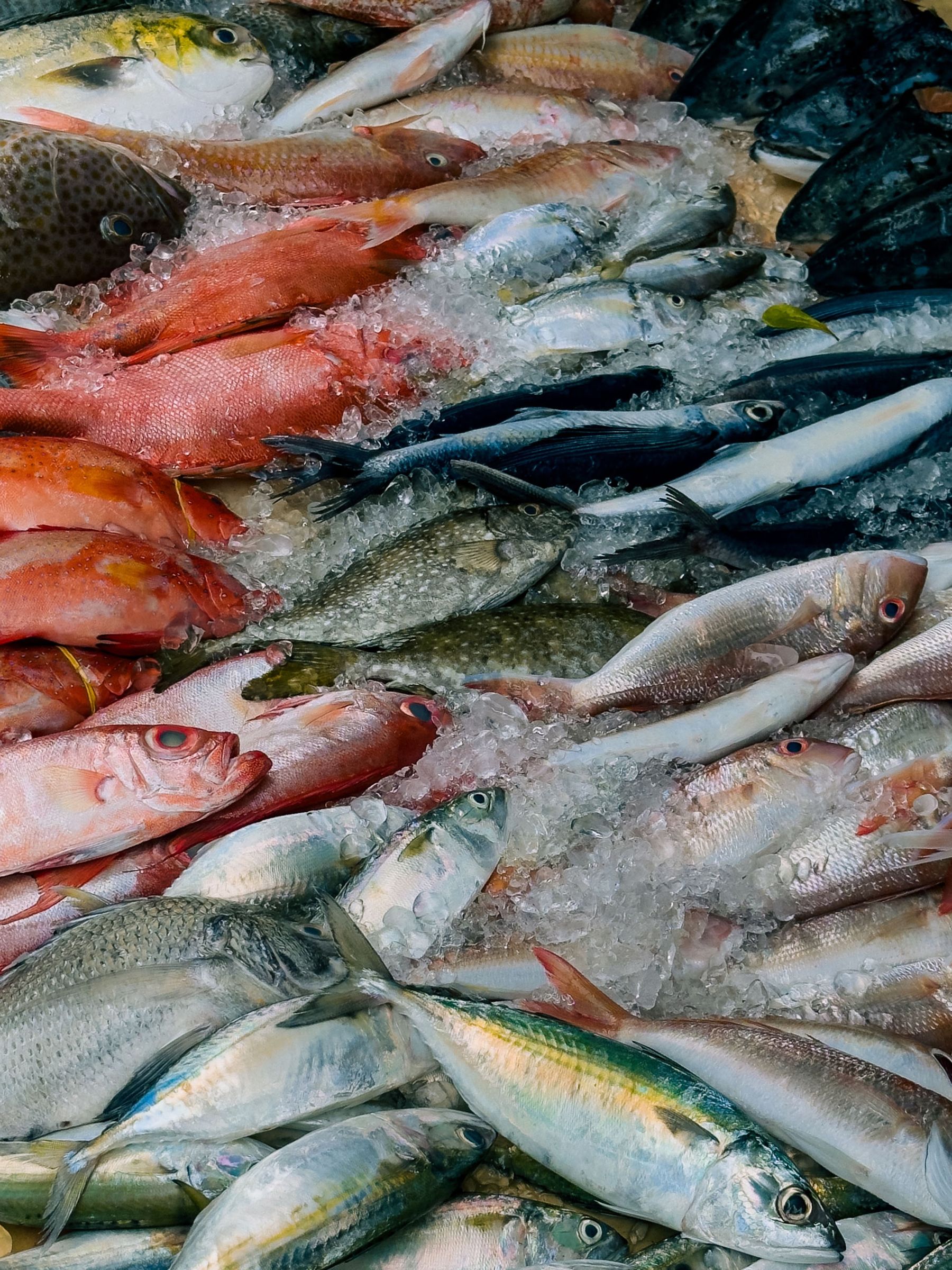
Fresh seafood displayed on crushed ice
Seafood & fisheries refrigeration

Protect the catch.
Preserve its market value.

Metalex Cryogenics engineers ice production, chilled handling, quick-freezing, process refrigeration, and frozen-storage systems for fishing harbours, landing centres, seafood processors, exporters, aquaculture operations, and distribution cold chains.

Share Planning Data
0°Ccatch chilling target
≤ −18°Cfrozen-chain planning
24/7processing duty
Indiasite-ready engineering

The cold chain starts at the catch.
Not at the cold store.

Fish and shellfish lose quality quickly when heat removal is delayed. Reliable seafood refrigeration connects landing, icing, receiving, processing, freezing, storage, and dispatch as one controlled temperature journey.

  • Ice and chilled-water systems planned around species, catch temperature, crate size, trip duration, and landing pattern.
  • Processing-room refrigeration coordinated with product flow, wash-down, hygiene zoning, doors, people, and equipment heat loads.
  • Blast, plate, or brine-freezing duty selected from product form, pack size, batch load, freezing time, and production schedule.
  • Frozen storage, ante-room, loading dock, monitoring, defrost, drainage, service access, and future expansion considered together.
Shrimp and seafood maintained on ice
Catch + process + freeze + store

One industry.
Multiple temperature-critical stages.

Metalex can help plan refrigeration from harbour and farm-gate chilling through processing, quick freezing, frozen storage, and dispatch.

Fresh fish on ice at a landing or market
Application 01

Fishing harbours & landing centres

Tube or crushed-ice production, chilled receiving, insulated holding, and rapid temperature pull-down for catch handling, auctions, transport, and local distribution.

Shrimp and shellfish processing cold chain
Application 02

Seafood processing & quick freezing

Refrigeration for fish, shrimp, crab, squid, and value-added lines using blast, plate, or brine-freezing concepts selected around the product and pack.

Frozen fish prepared for cold storage and distribution
Application 03

Frozen storage & reefer dispatch

Low-temperature stores, ante-rooms, staging, dock interfaces, monitoring, and loading arrangements designed to protect the frozen chain through dispatch.

Selected from the product flow.
Not only the room temperature.

Seafood refrigeration is a process-design problem. Product arrival, dwell time, ice ratio, wash water, packaging, freezing cycle, storage duration, doors, defrost, and dispatch pattern all affect the final plant.

01 / PRODUCT

Define catch and product load

Species, whole or processed form, daily tonnage, incoming temperature, harvest pattern, batch size, pack dimensions, and quality objective.

02 / CHILL

Plan immediate heat removal

Ice type, ice-to-product practice, chilled water, receiving time, crate geometry, drain-down, hygiene, and movement into processing.

03 / FREEZE

Select the freezing method

Blast, plate, or brine concept; batch or continuous duty; product core target; cycle time; evaporating condition; defrost; and refrigeration load.

04 / STORE

Protect storage and dispatch

Frozen-store capacity, pallet pattern, ante-room, door traffic, loading dock, monitoring, redundancy, service access, and expansion provision.

Core equipment for seafood cold-chain refrigeration.

The same Metalex product cards and interaction pattern are retained, with content aligned to fisheries and seafood duties.

Information needed for
a proper seafood plant selection.

Use this as a pre-RFQ checklist. Accurate input helps determine ice demand, processing refrigeration, freezer duty, cold-store capacity, utilities, equipment selection, and layout.

Share these details with Metalex.

Early estimates are useful. Final capacity, temperatures, freezing time, power, equipment dimensions, and performance should be confirmed against product trials, applicable standards, selected equipment, and agreed design conditions.

Seafood product
Species, fish / shrimp / crab / squid / shellfish, whole or processed form, pack type, block or IQF requirement, and product dimensions.
Daily throughput
Tonnes per day, hourly peak, batch size, seasonality, landing or harvest pattern, processing shifts, and future expansion target.
Receiving condition
Incoming product temperature, time from catch or harvest, transport method, crate size, existing icing practice, and receiving dwell time.
Chilling & ice
Required ice type and TPD, chilled-water duty, target product temperature, water source and treatment, wash-down, hygiene, drainage, and ice storage.
Freezer duty
Blast, plate, brine, or other process; product load per batch; pull-down or freezing time; target core temperature; packaging; loading method; and defrost cycle.
Storage & dispatch
Required frozen-store MT, storage duration, pallet / rack pattern, room and ante-room dimensions, door traffic, dock arrangement, and reefer loading pattern.
Site & utilities
City, ambient conditions, electrical supply, water, cooling-water system, backup power, plant-room space, access, corrosion exposure, and operating manpower.
Project status
New plant, export unit, tender, expansion, retrofit, compressor replacement, freezer upgrade, cold-store addition, automation, service, or spare requirement.

Common questions beforecold-chain selection.

Seafood is highly perishable. Rapidly lowering product temperature toward the temperature of melting ice slows quality deterioration and helps preserve freshness through handling and processing.
The best choice depends on species, crate geometry, trip duration, handling method, water quality, and local practice. Small ice pieces, flake-type ice, or slurry can improve contact compared with a few large pieces; Metalex can plan tube-ice production and downstream crushing or handling where required.
Blast freezing is flexible for varied shapes and packages. Plate freezing is efficient for regular flat packs or blocks. Brine systems may suit selected shrimp, shellfish, crab, or specific immersion processes. Product format, hygiene, batch size, cycle time, and quality objective determine the final choice.
Chilling lowers seafood close to the temperature of melting ice without freezing the product. Freezing removes substantially more heat and converts much of the product water to ice, enabling longer storage when the frozen chain is maintained.
Frozen-fish transport and storage are commonly planned at −18°C or colder, but product, customer specification, storage duration, applicable regulation, and export-market requirements may call for lower temperatures or tighter controls.
Ammonia is widely used in industrial refrigeration. Suitability depends on plant scale, system architecture, charge, site layout, corrosion environment, trained operation, detection, ventilation, safety provisions, maintenance capability, and applicable codes.
Refrigeration must support cleanable food-contact zones, drainage, temperature monitoring, controlled product flow, door management, and documented operating practices. Export facilities should align the final design with EIC / MPEDA approvals, HACCP plans, buyer specifications, and destination-market requirements.
Share product and pack details, incoming temperature, daily throughput, ice demand, freezer type or desired cycle, target temperature, cold-store MT, room dimensions, utilities, location, loading pattern, project stage, and existing refrigeration data.
Planning a seafood refrigeration project?

Share the catch or product type, throughput, incoming temperature, ice demand, freezer cycle, target temperature, storage capacity, location, utilities, and project timeline.

Discuss with Metalex

Talk to the team about ice machines, compressors, condensers, vessels, controls, process cooling, quick freezing, frozen stores, expansion, retrofit, service, and spare support.

Call Now →
✅ Seafood refrigeration enquiry captured. Connect the form to your backend to receive submissions.